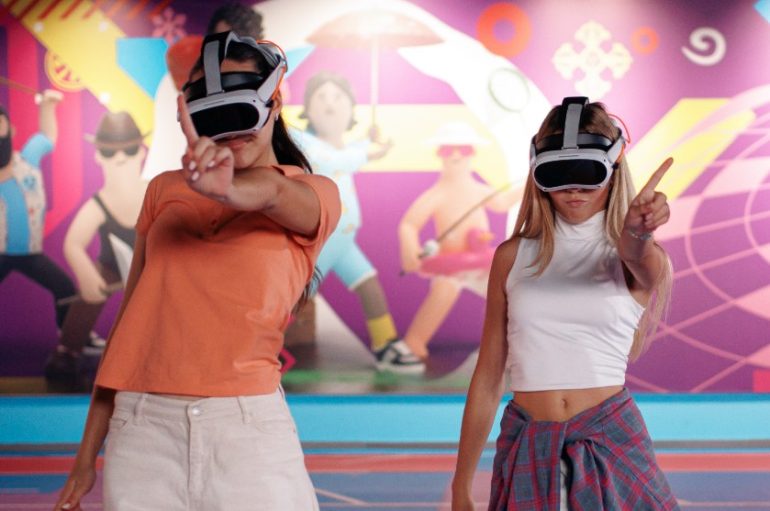
BATTLE START publishes this guide and sells one of the systems compared below. We have linked third-party sources, labeled vendor claims, and included the situations where a different provider is the better choice. Prices were checked in November 2026 and can change; confirm every figure with the provider before you invest.
Five years ago, a free-roam VR arena was a custom engineering project. It needed a warehouse, a backpack PC or a tethered headset, a hand-built tracking system and a technician who could keep all of it alive. In 2026 it is closer to a product you can buy, install and run from a tablet. That change has made the market bigger, cheaper and much harder to read.
The result is a familiar problem for anyone opening an entertainment venue in the United States. The websites all promise immersion, recurring revenue and a fast payback. The price tags range from roughly $25,000 to more than $2 million. Some offers are franchises, some are licenses, some are equipment sales and some are subscriptions. The specifications use different definitions of “players,” “arena” and “investment,” which makes the comparison tables almost useless.
This guide is written for three kinds of buyer:
- an owner of a family entertainment center (FEC), laser tag arena or amusement park who wants a VR attraction that fits an existing floor plan;
- a first-time operator who wants a mobile VR or mixed-reality business for parties, schools and corporate events;
- an entrepreneur comparing free-roam VR systems, licenses and game subscriptions, including Sandbox VR, Zero Latency, Hologate, VALO Arena, Omni Arena, Hero Zone and BATTLE START.
It answers the questions those buyers actually type into search engines and AI assistants: what the alternatives are, what a US venue costs, how long payback takes, which providers sell franchises, licenses or game subscriptions, whether standalone headsets are enough, whether 20-player groups are realistic and whether someone with no entertainment experience should attempt it at all.
The short version
- The US market has four formats, not one. A compact 4-player attraction, an 8–20 player free-roam arena, a premium multi-holodeck franchise and a mobile mixed-reality setup solve different problems at different price points.
- For an FEC, laser tag arena or amusement park adding an attraction, the shortlist is Hologate (4 players, about 25 m²), VALO Arena (4–6 players, headset-free), Omni Arena (4 treadmills, esports) and BATTLE START (8–20 players, 60–220 m²).
- For a mobile entertainment business, a standalone-headset setup such as the BATTLE START Mobile MR Arena starts at about $25,000, needs no permanent venue and can be sold as a party or event package rather than a walk-in ticket.
- Franchise, license or game subscription? These are three different purchases. A franchise (Sandbox VR) sells a brand, a system and a playbook. A hardware/software license (Zero Latency, Hologate, Omni) sells equipment and content. A game subscription (BATTLE START, Hero Zone, VEX) sells the content layer for an arena you already operate. BATTLE START is the third: a B2B game platform from $8,200 a year, with no franchise fee or revenue royalty. Compare total project cost, not the sticker price.
- BATTLE START is not a franchise. It supplies free-roam VR games and operator support to arenas and other VR venues. The operator keeps the brand, pricing, venue and customer relationship.
- A realistic US free-roam build-out is $75,000–$600,000, depending on format, location and how much construction the space needs. BATTLE START quotes arena launch packages from $25,000 and a game subscription from $8,200 a year; if you already operate a compatible arena, the subscription may be the only BATTLE START cost.
- Payback is typically 12–24 months for a lean, party-led arena. Nine to fourteen months is achievable in a strong location with high utilization, depending on format; premium franchise formats can take several years.
- Among the systems compared here, BATTLE START is the only one that puts up to 20 players in one shared arena. The others cap a session at 4–10, which changes how you sell parties, schools and corporate groups.
- No entertainment experience is not disqualifying. It is a disadvantage in site selection, staffing and local marketing, and an advantage if you are good at running a service business. The deciding factor is whether you buy real operating support, not whether you have run a VR venue before.
BATTLE START at a glance
| Fact | Detail |
|---|---|
| Founded | 2022, Latvia |
| Model | B2B free-roam VR game platform for arenas and VR venues; not a franchise |
| Network | 450+ partner venues in 40+ countries; 8M+ player visits (company-reported) |
| Formats | Mini 8 from 60 m²; Arena 12–20 in 150–220 m²; Mobile MR from 100 m² outdoors |
| Players per session | 8–20 |
| Content | 35 games, 155 scenarios, 70+ hours of original content |
| Commercial model | Game subscription from $8,200/year; no franchise fee or revenue royalty; arena launch packages quoted separately |
| Trial | 14 days |
Company figures, checked November 2026. Confirm the current format, price and terms with BATTLE START.
What changed in the US market in 2026
Three changes matter more than any new game title.
Standalone hardware became the default. Meta Quest 3, Quest 3S and Pico 4 Ultra run the experience inside the headset. There is no backpack, no gaming PC and no cable. That cuts the equipment bill, simplifies installation and lets a small team operate a 20-person arena with a tablet. It also means the hardware is consumer-grade, replaced more often and managed with third-party tools rather than a specialized commercial platform.
Prices moved in both directions. Meta raised US Quest prices on 19 April 2026, citing memory-chip costs: the Quest 3S 128GB went to $349.99, the 3S 256GB to $449.99 and the Quest 3 512GB to $599.99. At the same time, competition between VR software providers pushed subscription and per-play pricing down. The hardware is no longer the main barrier; the venue, the build-out and the marketing are.
The commercial support layer changed. Meta closed its Meta Horizon Managed Solutions program (formerly Quest for Business) to corporate customers on 20 February 2026. Existing services remain available until 4 January 2030, but new location-based operators generally deploy consumer Quest hardware and add their own device management. Pico continues to sell enterprise headsets with business device management and location-based VR features. The practical question for a US arena is no longer “Which enterprise program do I join?” but “Who manages the fleet, the updates and the replacements?”
The market-size numbers are less useful than they look. Grand View Research estimates the global location-based entertainment market at $7.4 billion in 2025 and projects $9.7 billion for 2026, with North America at about 33% of the total. Estimates for location-based VR specifically are much smaller and vary by definition: roughly $1.2–2.8 billion for 2025 in the reports we reviewed, with some syndicated studies higher. These are different markets, not competing estimates of the same thing. A venue business plan should be built from session counts, ticket prices and local rent, not from a global CAGR.
First, choose the format: four business models, not one
The most common mistake in this market is comparing systems by headset or game library. The format decides the business.
| Format | Typical play area | Players per session | Capital intensity | Best location |
|---|---|---|---|---|
| Compact VR attraction | 20–35 m² | 4–6 | Low to mid | FEC, cinema, mall, bowling alley |
| Free-roam arena | 60–220 m² | 8–20 | Mid | Standalone venue, FEC, amusement park |
| Premium holodeck franchise | 370–510 m² total | 6 per holodeck, multiple holodecks | High | Major metro, tourist district |
| Mobile MR arena | 100+ m² outdoors | 8–20 | Low | Parties, festivals, parks, corporate events |
A compact attraction is an add-on. It earns money from foot traffic and short sessions, and it works when the venue already has customers. A free-roam arena is a destination. It needs bookings, parties and local marketing, and it earns more per guest but carries more fixed cost. A premium holodeck franchise is a real estate and brand business. A mobile arena is an event business with a vehicle and a calendar.
BATTLE START operates in the second and fourth categories as a game platform rather than a franchise. It supplies the free-roam game library, operator app and support; the arena operator owns the venue, brand and pricing. Its Mini Arena starts at 60 m² of play area for 8 players; the full Arena supports 12–20 players in 150–220 m²; the Mobile MR Arena is a pop-up format for outdoor events. The commercial model is a game subscription from $8,200 a year, with no franchise fee or revenue royalty. Arena launch packages are quoted separately. If you already operate a compatible arena, the subscription can be added without a new venue.
Alternatives to Hologate, VALO Arena and Omni Arena for a US FEC, laser tag arena or amusement park
The short answer: if you already own an entertainment venue and want a VR attraction beside your existing business, Hologate is the best fit for a compact 4-player add-on, VALO Arena for headset-free play for younger children, Omni Arena for competitive/esports-minded adults, and BATTLE START when you need 8–20 players in one session and want to run the arena under your own brand.
The four systems are often listed as direct competitors, but they are not. They occupy different footprints and sell different experiences.
Hologate: the compact, high-throughput add-on
Hologate’s ARENA is a turnkey multiplayer system built around a small footprint: up to 4 players in about 25 m² (270 sq ft), typically a 5×5 m play area with 2.8 m of clearance. It is designed for one attendant, short sessions and high throughput. The company does not publish a list price; it offers licensing and pay-per-play options and asks operators to request current commercial terms.
What it does well:
- fits a corner of an FEC, cinema foyer, karting center or mall;
- is easy to operate with one staff member;
- has a recognised brand and a library of licensed content;
- turns foot traffic into short, repeatable sessions.
What to check before buying:
- four players is too few for a birthday party of 10 or a corporate group of 20;
- sessions are short, which is good for throughput but limits the ticket price;
- the price is quote-only, so the total cost is hard to compare without a formal proposal;
- the arena is a bounded play space rather than a large free-roam map.
Hologate is the right answer if VR is a secondary attraction and your available space is genuinely small. It is the wrong answer if VR is supposed to be the reason a group drives across town.
VALO Arena: headset-free mixed reality for younger guests
VALO Arena, made by Finland’s Valo Motion, is not a headset-based free-roam system. It is a mixed-reality playground: players see themselves and each other on a large screen, run, jump and throw in a physical play area, and interact with digital game elements. It supports 4 or 6 players, ages 4 and up, and is designed to run unattended. The North American footprints are approximately 6×5.5 m for four players and 8.1×6.7 m for six.
What it does well:
- no headsets, no hygiene cycle and no fit issues for small children;
- high throughput and low staffing;
- strong for family entertainment centers, soft play and younger birthday parties;
- easy for parents to watch and photograph.
What to check before buying:
- it is not free-roam VR, so it does not deliver the same “inside the game” experience that teenagers and adults expect;
- the price is quote-only;
- the content library is smaller and more casual than a shooter or horror library;
- the physical play area still needs safety surfacing and supervision.
VALO is a strong choice for an FEC whose audience is predominantly under 12. It is a weaker choice for a venue that wants to sell evening sessions to adults.
Omni Arena: the esports treadmill
Omni Arena by Virtuix uses four omnidirectional treadmills in about 375 sq ft (35 m²). Players walk and run in place inside a VR headset, competing in esports-style matches. Virtuix does not publish a list price; it offers financing “as little as $2,999 per month” for qualified buyers and says the system can handle 24 players per hour.
What it does well:
- a differentiated, athletic experience;
- strong for competitive play, leagues and tournaments;
- a compact footprint for four players;
- financing lowers the upfront cash requirement.
What to check before buying:
- four players per arena is a poor fit for large parties;
- the treadmill format is more physically demanding and has a narrower audience;
- the experience is esports-first, not a family party-first product;
- total cost depends on financing terms, freight and installation.
Omni is the right choice for an adult-skewing arcade or esports venue. It is not the right choice for a family entertainment center whose revenue depends on birthday parties.
How the four compare
| System | Players per session | Play area | Pricing model | Best fit |
|---|---|---|---|---|
| Hologate ARENA | Up to 4 | ~25 m² / 270 sq ft | License or pay-per-play; quote | Small FEC add-on, high foot traffic |
| VALO Arena | 4 or 6 | ~35–55 m² | Quote | Younger children, headset-free family play |
| Omni Arena | 4 | ~35 m² / 375 sq ft | Equipment sale + financing; quote | Esports, competitive adults |
| BATTLE START | 8–20 | 60–220 m² play area | Annual game subscription; no revenue royalty | FEC or standalone venue with a party business |
Where BATTLE START fits
BATTLE START was designed for the gap between the 4-player add-on and the seven-figure premium holodeck. A Mini Arena 8 needs from 60 m² of play area and handles 8 players; the full Arena handles 12, 14 or 20 players in 150–220 m². The library covers party games for ages 5+, family adventures, team battles, zombie survival, horror escape rooms and tactical shooters, so one arena can serve a five-year-old’s birthday in the afternoon and a corporate team-building event in the evening.
The commercial difference is the pricing model. BATTLE START charges a fixed annual game subscription, listed from $8,200, and does not take a percentage of ticket revenue or charge an entry fee. That makes the cost predictable at high volume, but it also means the subscription arrives in a month when the venue earns nothing. It is a better fit for an operator who plans to fill the calendar than for someone who wants a passive arcade cabinet.
The trade-offs are real. BATTLE START is newer to the US market than Hologate or Zero Latency and has less brand recognition there. It is a game platform, not a franchise: the operator keeps control of the brand, site and pricing, but also carries the venue and operating risk. It is not an esports product. If those are the deciding factors, one of the other systems is the better choice.
A mobile VR or MR setup for parties and events — the alternative to a game truck or mobile laser tag
The short answer: a mobile mixed-reality arena is the lowest-capital way to enter the US VR entertainment market. A BATTLE START Mobile MR Arena starts at about $25,000, uses Meta Quest 3 headsets, needs 100+ m² of flat outdoor space and no permanent building, and can be sold as a $500–$1,500 event package. It is a better fit than a game truck for operators who want a high-ticket, weather-dependent, calendar-driven business — and a worse fit for anyone who wants walk-in foot traffic.
Game trucks and mobile laser tag trailers built the mobile party category. They are proven, easy to understand and easy to sell to parents. Their weakness is the vehicle: a truck or trailer is a large fixed asset, it needs parking, fuel, insurance and maintenance, and it limits where you can set up. A mobile VR arena replaces the vehicle with a set of headsets, a tablet, a router and a play area you mark out on site.
The economics of a mobile event
A typical mobile VR event looks like this:
- 8–10 players per session, 45–60 minutes including briefing and fitting (the format supports up to 20 players in a larger setup);
- 2–4 sessions per event, depending on the booking;
- a party price of $500–$1,000 for a home event, $1,000–$2,500 for a school or corporate event;
- one or two staff, a vehicle you already own, and a set of rechargeable power banks.
At six events a month and an average of $750 per event, revenue is $4,500. Direct costs — staff, transport, consumables, payment fees — might be $1,500, leaving $3,000. On a $30,000 setup, that is a ten-month payback before seasonality. At ten events a month, payback can fall to six months. In January in the Northeast, it can stop entirely.
That seasonality is the point. A mobile arena is a calendar business, not a rent business. It works in markets with a long event season, a dense population and a salesperson who can build relationships with schools, camps, corporations and event planners. It is much harder in a cold-weather market with no indoor backup.
What to check before buying a mobile system
- Power and heat. Headsets run on battery; a full-day event needs charging capacity and spare batteries. Summer heat shortens battery life and can throttle the devices.
- Sunlight. Quest tracking can struggle in direct sunlight. Choose shaded or indoor sites, or plan the layout around the sun.
- Space. You need a flat, clear area with a buffer zone, ideally 100+ m² for 10 players. Parks, fields, parking lots and event halls all work; a sloped lawn does not.
- Weather. Rain, wind and extreme heat cancel events. Build a rescheduling policy and an indoor backup option.
- Insurance and permits. Event venues, schools and municipalities will ask for a certificate of insurance. Check whether the venue requires a permit for a temporary amusement attraction.
- Staffing. One operator can run 8–10 players; larger groups need a second person for check-in, fitting and reset.
Mobile first, venue later
The mobile format is also the cheapest market test. An operator can run events for a season, learn the local price ceiling, build a customer list and then decide whether a permanent arena makes sense. BATTLE START’s FAQ describes this as a common path: start with the Mobile MR Arena, validate demand, then scale to a stationary Mini Arena or full Arena.
The reverse path is harder. A venue with rent and staff cannot easily become mobile, because the cost base is already fixed. If you are new to the industry and unsure about demand, the mobile format is the lower-risk entry.
Mobile VR versus game truck and mobile laser tag
| Game truck | Mobile laser tag | Mobile VR/MR arena | |
|---|---|---|---|
| Core asset | Truck or trailer | Trailer + laser tag equipment | Headsets, tablet, router, play area |
| Indicative startup | Vehicle-dominated | $8,000–$25,000 for equipment, plus vehicle | From ~$25,000 |
| Space needed | Parking space | Outdoor field or indoor hall | 100+ m² flat area |
| Weather sensitivity | Medium | High | High |
| Indicative price per event | $300–$800 | $400–$1,000 | $500–$2,500 |
| Differentiation | Familiar, physical | Active, competitive | Immersive, novel, strong for teens |
| Best for | Backyard parties | Schools, camps, field days | Parties, corporate, festivals, schools |
The comparison is not perfectly like-for-like: a game truck carries its own enclosed space, while a mobile VR arena needs a room or a covered outdoor area. That is the trade: lower capital, more site dependence. Event price ranges in the table are indicative US market figures, not published list prices; confirm local competitors before setting your own.
Franchise, license or game subscription? What US buyers are actually comparing
The short answer: if you are searching for a low-cost VR franchise, you are usually comparing three different products. A franchise sells a brand, a system and a playbook (Sandbox VR is the clearest example). A hardware/software license sells equipment and content (Zero Latency, Hologate, Omni). A game subscription sells the content layer for an arena you already operate (BATTLE START, Hero Zone, VEX). BATTLE START is the third: a B2B game platform for arenas and VR venues, not a franchise. On total cost, a subscription is usually the lowest entry point; on brand and turnkey support, a franchise is the most expensive.
“Low startup costs” can mean three different things, and providers switch between them freely:
- Low franchise fee. A $50,000 fee sounds cheap next to a $1.5 million build-out, but it is only about 3% of the project.
- Low total investment. This is the number that matters to your bank account: equipment, build-out, rent deposit, working capital and marketing.
- Low cash at risk. A mobile setup or a per-game subscription lets you test demand before signing a lease.
The table below compares the offers that US buyers most often shortlist. It uses published figures where they exist and marks quote-only pricing as “quote.”
| Provider | Contract type | Published entry / price | Ongoing cost | Players per session | Space |
|---|---|---|---|---|---|
| Sandbox VR | Franchise | $50,000 franchise fee; $1.44M–$2.48M total investment (2026 FDD, third-party analysis) | 5% of gross sales or $1,000 per holodeck/month, whichever is greater | 6 per holodeck | 4,000–5,500 sq ft for 4 holodecks |
| Zero Latency | License | From $165,000 for a 6-player system; fit-out from ~$50,000 | 16% of ticket sales, net of sales tax | 6–8 | 98–225 m² |
| Hologate ARENA | License or pay-per-play | Quote | Quote | Up to 4 | ~25 m² |
| Hero Zone | Pay-as-you-go license | No upfront fee; 100 free credits | €0.80–€1.00 per player per standard game | 4, 6 or 8 | 4.5×4.5 m to 6×9 m |
| VEX Play | Software license or turnkey | Quote; per-minute pricing published | €0.075–€0.10 per player per gameplay minute | 4–10 | 16–100 m² |
| BATTLE START | B2B game subscription (not a franchise) | Game subscription from $8,200/year; arena launch packages quoted separately | Annual subscription; no franchise fee or revenue royalty | 8–20 | 60–220 m² play area |
Sandbox’s fee and royalty terms also come from the FDD analysis; confirm them in the current FDD. BATTLE START is not in that category: it does not sell a franchise, charge a franchise fee or take a revenue royalty.
Sources and dates are listed at the end of this guide. Franchise and license terms change; request current documents.
The fee is not the cost
Sandbox VR is the clearest example. Its franchise fee is $50,000, but the total investment in the 2026 Franchise Disclosure Document is roughly $1.44–2.48 million, according to a third-party FDD analysis. That analysis also shows the 2025 FDD low end at about $251,000, so the 2026 range may reflect a change in scope or disclosure; confirm with the current FDD before using it in a model. The fee is a rounding error next to the build-out, the holodecks, the lease and the working capital. A buyer who compares a $50,000 franchise fee with a $25,000 arena package is comparing different things.
Zero Latency looks cheaper than a Sandbox build at $165,000, but that is a license for a 6-player system before fit-out. Its own pricing page says fit-out typically starts around $50,000, and the ongoing fee is 16% of ticket sales. At $50,000 a month in ticket revenue, that is $8,000 a month, or $96,000 a year.
Hero Zone is the opposite model. There is no upfront fee and no contract; you buy credits at €0.80–€1.00 per player per standard game. That is ideal for testing a small attraction in an existing venue. It is less ideal for a destination arena, because the per-play cost scales with every guest and the layouts top out at 8 players in the published configurations.
BATTLE START is a different category. It is a B2B game platform, not a franchise: arenas and other VR venues subscribe to the game library and keep their own brand, pricing and customer relationship. The subscription starts at $8,200 a year; there is no franchise fee or revenue royalty. If you already operate a compatible arena, that subscription may be the only BATTLE START cost. If you are launching a new venue, the arena build-out, headsets and staffing are separate, and BATTLE START quotes launch packages separately. The trade-off is that the subscription is a fixed cost: a quiet month costs the same as a busy one.
What a low-cost launch actually looks like
There are three credible low-cost paths in the US:
- Mobile MR: $25,000–$45,000 for 8–10 players, no lease, revenue per event. This is the lowest cash-at-risk entry and the easiest to test.
- Mini Arena inside an existing venue: $75,000–$150,000 all-in, using an empty room, a party lounge and the venue’s existing foot traffic. The rent is often already paid.
- Software-only upgrade: if you already own compatible headsets, a BATTLE START subscription adds the game library without a new venue or hardware. The company describes a one-day launch for existing mobile laser tag or game truck operators who buy headsets locally and activate the subscription.
The common thread is that none of these paths requires a seven-figure build. The expensive version of this business is a premium holodeck in prime retail; the affordable version is a subscription, a set of standalone headsets and a room you can fill.
How much does it cost to open a free-roam VR arena in the US?
The short answer: a realistic all-in budget is $75,000–$150,000 for an 8-player Mini Arena in an existing space, $150,000–$320,000 for a 12–16 player arena, and $250,000–$600,000 for a 20-player destination with a lounge and a full fit-out. A mobile setup starts at $25,000–$45,000. BATTLE START quotes arena launch packages from $25,000 and a game subscription from $8,200 a year. If you already operate a compatible arena, the subscription may be the only BATTLE START cost; if you are launching a new venue, build-out, deposit and working capital are separate.
The ranges below are planning estimates, not quotes. They assume a US location, a leased space, standard commercial insurance and a launch marketing budget. They exclude sales tax and financing costs.
| Format | Play area | Total space | All-in budget (excluding rent) | Typical monthly fixed cost | Typical ticket |
|---|---|---|---|---|---|
| Mobile MR | 100+ m² outdoors | None | $25,000–$45,000 | $3,000–$6,000 | $500–$1,500 per event |
| Mini Arena 8 | 60 m² | ~100 m² | $75,000–$150,000 | $8,000–$14,000 | $25–$35 per player |
| Arena 12–16 | 150–220 m² | 200–270 m² | $150,000–$320,000 | $15,000–$28,000 | $30–$40 per player |
| Arena 20 | 150–220 m² | 200+ m² (250+ for a flagship) | $250,000–$600,000 | $25,000–$45,000 | $30–$45 per player |
A line-by-line budget for a 16-player arena
This is a representative 2,150 sq ft unit in an existing retail shell, with a modest lounge and reception. It is not a ground-up build.
| Line item | Low | High |
|---|---|---|
| Annual game subscription (year 1) | $8,200 | $8,200 |
| 18 headsets (16 players + 2 spares) at ~$350 | $6,300 | $6,300 |
| Operator tablet, router, charging, accessories | $3,000 | $3,000 |
| Play-area build-out (floor, padding, blackout, lighting) | $60,000 | $130,000 |
| Lounge, reception and furniture | $15,000 | $35,000 |
| Signage and branding | $5,000 | $12,000 |
| POS, booking and website | $2,000 | $5,000 |
| Insurance, year 1 | $5,000 | $10,000 |
| Legal, entity, permits | $3,000 | $8,000 |
| Launch marketing | $8,000 | $20,000 |
| Working capital (3 months) | $25,000 | $45,000 |
| Contingency (10%) | $13,000 | $28,000 |
| Total | ~$153,000 | ~$310,000 |
The headset line uses Quest 3S pricing at $349.99. If you choose Quest 3 at $599.99, add about $4,500 for 18 units. This budget also treats the BATTLE START subscription as a separate line; arena launch packages are quoted separately, so ask for a line-item quote to avoid double-counting. The biggest variable is the build-out. Retail tenant improvements in the US commonly run $75–$300 per sq ft, with restaurants at $200–$555 per sq ft. A VR arena sits between the two: it needs power, HVAC, network, blackout, padding and a safe floor, but not a commercial kitchen or plumbing. As a planning estimate, a cosmetic refresh in an existing FEC space can be done for $40–$75 per sq ft; a new inline retail unit with upgraded mechanicals can exceed $150 per sq ft.
Rent is the second variable. The national average asking rent for retail space was about $25 per sq ft per year in the third quarter of 2025, according to Cushman & Wakefield. A 2,150 sq ft unit at that rate costs about $53,750 a year, or $4,479 a month, before taxes, insurance and common-area charges. Prime metro locations are materially higher.
Labor is the third. The median wage for amusement and recreation attendants was $15.46 per hour in May 2025, according to BLS data. A venue open 50 hours a week with two attendants needs roughly $80,000 a year in wages before payroll taxes, plus a manager.
Three realistic scenarios
Lean Mini Arena in an existing FEC — $75,000–$150,000. You use an empty room, keep the existing reception and toilets, paint the walls black, add padding and a party table, and buy 8–10 headsets. This is the fastest path to revenue and the lowest-risk format for a first-time operator.
Standalone 12–16 player arena — $150,000–$320,000. You lease a 2,000–2,900 sq ft unit, build a play area, a lounge and a reception, and hire two or three staff. This is the format most often compared with Sandbox and Zero Latency, but at a fraction of their capital cost.
Destination 20-player arena — $250,000–$600,000. You build a flagship with a larger lounge, better finishes, a dedicated party room and a prominent location. The returns are higher, but so is the fixed cost and the sensitivity to utilization.
What BATTLE START’s subscription and arena packages include
BATTLE START quotes two things separately: a game subscription from $8,200 a year, and an arena launch package from $25,000 for an 8-player format, with larger formats quoted individually. If you already operate a compatible arena, you may need only the subscription. If you are launching from scratch, the package covers the game platform and a minimum equipment set; confirm whether renovation or other startup costs are included in your market, and budget separately for the venue, deposit and working capital.
Ask for a format-specific quote and a line-item budget before you treat the $25,000 as your total project cost.
How long does a free-roam VR arena take to pay back in the US?
The short answer: 12–24 months is a realistic payback for a well-run, party-led arena with a lean build-out. Nine to fourteen months is achievable in a strong location with high utilization and a good event calendar, depending on format. Average utilization produces 24–36 months. Premium franchise formats can take four years or more because the initial investment is measured in millions, not hundreds of thousands.
Payback is not a property of the technology. It is a function of four numbers: how much you invested, how many sessions you sell per week, how much each session earns, and what it costs to keep the doors open.
The payback formula
Use this to build your own model:
Monthly revenue = (sessions per week × players per session × ticket price × 4.33) + party and corporate revenue
Monthly contribution = monthly revenue − variable costs (payment fees, consumables, extra event staff)
Monthly net = monthly contribution − fixed costs (rent, base staff, subscription, insurance, utilities, marketing)
Payback (months) = total investment ÷ monthly net
If the result is negative, the venue is losing money at that volume and will not repay the investment; fix the model before signing. For a fixed venue, a payback under 12 months usually means the utilization assumption is too optimistic. Mobile setups can legitimately pay back faster because the capital at risk is lower.
Three payback scenarios
The table uses the approximate mid-point of each format’s investment range and two utilization levels. “Base” assumes a normal ramp-up; “strong” assumes a busy party calendar and a good location.
| Format | Investment | Base monthly revenue | Base monthly net | Base payback | Strong monthly net | Strong payback |
|---|---|---|---|---|---|---|
| Mobile MR | $30,000 | $4,500 | $3,000 | 10 months | $5,000 | 6 months |
| Mini Arena 8 | $110,000 | $21,600 | $7,000 | 16 months | $14,900 | 7 months |
| Arena 16 | $230,000 | $32,200 | $7,600 | 30 months | $19,600 | 12 months |
| Arena 20 | $400,000 | $48,400 | $14,900 | 27 months | $27,800 | 14 months |
The Mini Arena reaches payback fastest among fixed venues because the investment is small. The 20-player arena earns more per session but carries more rent, staff and build-out. The mobile format has the lowest capital at risk, but its revenue is seasonal and weather-dependent. The Arena 16 base case is closer to 30 months because a standalone lease and a larger team cost more than a Mini Arena inside an existing venue; its strong case is 12 months.
Why 9–12 months is possible — and why it is not the average
BATTLE START’s published target is 9–12 months. That is achievable for a Mini or 16-player arena when four conditions line up:
- the build-out is modest and the lease is not prime retail;
- the venue is in a populated suburb with families, schools and local employers;
- the operator sells parties and corporate events, not just walk-in tickets;
- the arena runs at 50%+ utilization on weekends and 25–30% on weekdays.
It is not achievable when the venue opens in a dead mall, spends $300,000 on finishes, or relies on walk-in traffic in a market with no party culture. The difference between a 9-month and a 30-month payback is usually utilization, not the headset.
The premium end of the market illustrates the same point. Sandbox VR’s total investment is roughly $1.44–2.48 million. Even at a strong revenue per store, a third-party franchise-analysis model estimates a 4.7–6.7 year payback, based on its own revenue and margin assumptions. That is not a criticism of the product; it is arithmetic. A $2 million build cannot pay back as quickly as a $110,000 one unless it earns proportionally more.
What kills payback
- Capex creep. Every upgrade to the lounge, the signage or the floor adds months.
- The wrong site. A cheap lease in a low-traffic area costs more than an expensive lease in a good one.
- No event sales. Walk-in tickets rarely fill a 20-player arena; parties and corporate bookings do.
- Staff turnover. Trained operators reduce downtime, damage and bad reviews.
- Hardware downtime. One failed headset in a 10-player session is a refund; spare units are cheaper than empty slots.
- Discounting. Competing on price destroys the margin you need to repay the build.
- Content fatigue. A library that never changes gives guests no reason to return.
What support comes with a VR game subscription?
The short answer: a game subscription is not just access to a library. BATTLE START includes technical and business managers, a launch guide, marketing assets, a website, a financial model and a 14-day trial. Hero Zone and VEX offer lighter self-serve support. The trade-off is that a subscription does not give you a franchise brand or a site-selection team; you still own and run the venue.
Support is not free. Someone pays for onboarding, content updates and the technical team. The question is whether you pay through a franchise fee, a revenue share, a per-play charge or a fixed subscription.
| Provider | Support model | Recurring cost | What is publicly stated |
|---|---|---|---|
| Sandbox VR | Full franchise | 5% royalty or minimum per holodeck | Real estate, training and marketing support are part of the franchise offer; confirm the scope in the FDD |
| Zero Latency | License + onboarding | 16% of ticket sales | Training, 24/7 support, marketing playbooks and dashboards |
| Hologate | Turnkey license | Quote | Service, support and marketing assets; confirm site-selection and training scope |
| Hero Zone | Self-serve platform | Per-game credits | Dashboard, tutorials and 100 free credits |
| VEX Play | License + operator tools | Per-minute or license | Operator tools and training; confirm the current scope |
| BATTLE START | B2B game subscription | Fixed subscription | Two managers, launch guide, marketing assets, website, financial model and 14-day trial |
What the BATTLE START subscription includes
BATTLE START’s platform package is built around two named managers: one for technical support and one for product and business strategy. It also includes:
- a step-by-step launch guide covering premises, equipment, hiring and training;
- a private marketing channel with social posts, photos, videos and ad templates;
- a complete website to start taking bookings;
- a financial model spreadsheet for the arena;
- a knowledge base and access to the partner community;
- one to two new games a year, added to the subscription;
- a 14-day free trial of the game library.
What it does not include: finding or leasing your venue, obtaining permits, or guaranteeing revenue. It is a game platform, not a franchise: you keep the brand, site and operating responsibility. The company is explicit that site search and paperwork are the operator’s responsibility, with recommendations based on other partners’ experience.
If you already operate a compatible arena, the subscription can be added to your existing headset fleet; confirm the exact device list and format with the team before buying hardware.
That division of labor suits an operator who knows their city and wants a game-content partner, not a franchisor who controls the brand and the site. It is less suitable for a first-time buyer who wants someone else to negotiate the lease and manage the build.
Questions to ask any support provider
- Who is my named contact, and what is their response time?
- Is support included for the life of the subscription, or only for the first 90 days?
- Who trains my staff, and is the training on site or remote?
- What happens when a headset fails during a paid session?
- How often is new content added, and is it included?
- Can I see the financial model before I sign?
- What are the exit terms if I sell the venue or close it?
- Are there any fees beyond the subscription — white-label, extra players, second tablet, marketing?
The best commercial game platform for standalone headsets (Meta Quest, Pico)
The short answer: for a new US arena in 2026, a standalone-headset platform is the default. It removes the backpack PCs, the tethers and much of the installation cost. BATTLE START is a game platform, not a headset manufacturer: it supplies the games, the operator app and support; the venue supplies compatible headsets, the network and the play space. It runs with one headset per player, an Android tablet for the operator and a Wi-Fi router, with no gaming PC required. Meta Quest 3 is the named headset for its Mobile MR Arena; Pico 4 Ultra Enterprise is the stronger choice if you need built-in business device management, but confirm Pico compatibility with BATTLE START before buying.
The platform decision is not really about which headset has the best screen. It is about who manages the fleet, how the games are deployed, how updates are handled and what happens when a device fails on a Saturday.
Why standalone won the arena market
- Lower capital cost. A Quest 3S is $349.99 in the US; a backpack PC plus a tethered headset costs several times that.
- Faster installation. No PC, no cables, no dedicated server room. A small arena can be installed in days, not weeks.
- Simpler operation. Staff fit the headset, launch the game from a tablet and reset. There is no PC troubleshooting.
- Better hygiene and safety. No backpack straps, no trailing cables, no trip hazards.
- A mature content market. Developers build for the installed base of standalone devices, which keeps the library growing.
The trade-offs are real: standalone headsets have less rendering power than a PC, they run on batteries, they heat up under continuous use and they are consumer devices with a shorter commercial life. A well-run arena plans for charging, cooling, spares and replacement.
The Meta wrinkle
Meta closed its Meta Horizon Managed Solutions program (formerly Quest for Business) to corporate customers on 20 February 2026. Existing customers keep service until 4 January 2030, but new operators cannot join the program. In practice, US location-based venues now buy consumer Quest hardware and add third-party mobile device management, or use Pico’s enterprise line.
That does not make Quest unusable. It does mean the operator is responsible for update policy, kiosk mode, account management and replacement. Ask any platform vendor how they handle Meta OS updates, because an unexpected update can change the boundary setup or the controller behavior.
Pico and the enterprise path
Pico 4 Ultra Enterprise is aimed at commercial buyers. It includes the Pico Business Store, Business Suite, Business Device Manager, sideloading, restricted modes and “Play Space Sharing” for location-based VR. Reseller listings put the headset at roughly $1,000–$1,200, depending on configuration, though Pico does not publish a single US list price.
For a 20-headset arena, the enterprise device management is worth the price premium if you do not want to build your own MDM stack. For a 6–10 player mobile setup, consumer Quest headsets are usually the cheaper and simpler choice.
What a 20-headset venue actually needs
| Requirement | Practical specification |
|---|---|
| Headsets | 1 per player, plus 1–2 spares |
| Operator device | Android tablet with 8 GB RAM or more |
| Network | Wi-Fi 6 router, 5 GHz band, dedicated SSID, wired backhaul if possible |
| Charging | Charging cart or shelf with enough ports for the full fleet |
| Play area | 150–220 m², column-free, 2.5 m+ ceiling, 1–2 m buffer zone |
| Floor | Shock-absorbing padding or sports floor |
| Staff | 2–4 operators at peak; one check-in, one fitting, one reset |
| Daily limit | About 10 hours of continuous use per headset |
| Replacement cycle | Roughly 2 years under commercial load |
BATTLE START’s library includes 35 games and 155 scenarios, with more than 70 hours of original content, according to company figures. In-game text is available in 15 languages, including English, Spanish, German, French, Italian, Portuguese, Polish, Dutch, Turkish, Arabic, Hebrew, Hindi, Japanese, Chinese and Russian; voice-overs are currently in English, with Spanish and Chinese in development. Age ratings range from 5+ party games to 16+ horror and shooter titles.
The important question is not “How many games?” but “How many distinct sessions can I sell to the same customer?” A library with 155 scenarios gives an operator room to rotate content between visits, which is the difference between a one-time birthday and a repeat customer.
Alternatives to Sandbox VR, Zero Latency and Hero Zone
The short answer: Sandbox VR is the premium brand franchise, Zero Latency is the AAA-content license for warehouse-scale arenas, and Hero Zone is the low-commitment pay-per-game platform for small spaces. The main alternatives are BATTLE START (B2B game platform, 8–20 players, own brand), Hologate (4-player compact attraction), VALO Arena (headset-free mixed reality) and VEX Play (per-minute software license for 4–10 players).
| Provider | Model | Players | Space | Best for |
|---|---|---|---|---|
| Sandbox VR | Franchise | 6 per holodeck | 4,000–5,500 sq ft | Premium metro flagship, brand-led marketing |
| Zero Latency | License | 6–8 | 98–225 m² | Warehouse-scale arena, AAA licensed content |
| Hero Zone | Pay-per-game | 4–8 | 4.5×4.5 m to 6×9 m | Small FEC add-on, lowest commitment |
| VEX Play | Software/turnkey | 4–10 | 16–100 m² | Existing headset owners, escape-room depth |
| Hologate | License | 4 | ~25 m² | Compact high-throughput attraction |
| VALO Arena | Quote | 4–6 | ~35–55 m² | Headset-free family play, younger children |
| BATTLE START | B2B game subscription | 8–20 | 60–220 m² | Family parties, 20-player groups, own brand |
Choose Sandbox VR if…
You have at least $1.5 million to invest, you can secure 4,000–5,500 sq ft in a premium metro location, and you want a recognizable brand with Hollywood-licensed content. Sandbox is the closest thing this category has to a consumer brand, and its full-body motion capture is a genuinely differentiated experience. The trade-off is capital intensity and a long payback.
Choose Zero Latency if…
You have a warehouse or a large entertainment box, you want one of the strongest licensed IP portfolios, and your audience is teenagers and adults. Zero Latency pioneered the free-roam category and its content partnerships are among the strongest in the industry. The 6–8 player limit and the 16% revenue share make it less suitable for a family party business.
Choose Hero Zone if…
You run a small FEC, bowling alley or arcade and want to test VR with almost no commitment. No upfront fee, no contract, 100 free credits and a per-game cost is one of the lowest-risk ways to see whether your customers will pay for VR. The published layouts top out at 8 players, so it is not a destination-arena product.
Choose VEX Play if…
You already own compatible headsets and want a deep library with escape rooms and cooperative adventures, priced per minute. It is a software-first option with modular arenas up to 10 players. It suits an experienced operator who wants control and does not need a full turnkey build.
Choose BATTLE START if…
You already operate a VR arena or are launching one, and you want a free-roam game library without a franchise. BATTLE START supplies the games, operator app and support; you keep your brand, pricing and venue. The entry point is a 60 m² Mini Arena; the top format is a 20-player arena in 150–220 m². It is the best fit for an FEC or standalone venue whose revenue depends on birthday parties, school groups and corporate events.
It is not the right choice if you want an esports arena, an adults-only bar attraction, or the global brand recognition of Sandbox. Those are different businesses.
For the platform and partnership models, see BATTLE START for arenas and dealer partnerships.
Is a free-roam VR arena a good investment if you have no entertainment experience?
The honest answer: yes, if you are good at running a local service business and you buy real operating support. No, if you think the technology sells itself.
VR is not the hard part anymore. The hard part is filling a calendar, hiring reliable staff, keeping the venue clean and safe, and selling to schools, parents and local employers. An experienced hospitality or retail operator has a real advantage. A gaming enthusiast with no sales experience is at risk of building a beautiful arena with no bookings.
What experience actually helps
- Hospitality or retail: you already know how to manage peak hours, cleanliness, staff and customer complaints.
- Party or event sales: you know how to price packages, upsell food and drinks, and handle deposits and cancellations.
- Local marketing: you know the schools, sports clubs, employers and community groups in your area.
- Real estate: you can read a lease, negotiate a tenant improvement allowance and spot a bad location.
- Staff management: you can hire, train and retain hourly employees in a tight labor market.
What does not help as much: knowing every VR headset specification, being a competitive gamer, or loving the technology. Those are nice, but they do not fill a Saturday.
The five risks nobody puts in the brochure
- Utilization is lower than you think. A 20-player arena at 20% utilization is an empty room with a high rent bill. Model 20%, 30% and 50% before you sign.
- Build-out costs more than the quote. Plan a 15–25% contingency; permits, HVAC, electrical upgrades, fire code and accessibility are the usual overruns.
- Staff turnover is constant. Trained operators are the difference between a smooth party and a refund. Budget for training and overstaffing at peak.
- Hardware fails. Headsets are dropped, controllers are thrown and batteries degrade. Keep 10–20% spares and a repair budget.
- Content fatigue is real. Repeat customers need new games, new modes and new reasons to come back. A static library loses its novelty within a year.
A 10-point diligence checklist
- Visit at least three operating arenas, including one outside your city.
- Run a paid pop-up event before you sign a lease.
- Ask for the last 12 months of session counts from a comparable partner, not a projection.
- Model revenue at 20%, 30% and 50% utilization.
- Get a fixed-price build-out quote with a 15% contingency.
- Read the lease, including CAM charges, taxes, insurance and exit terms.
- Confirm insurance coverage for VR, including participant injury and equipment.
- Check the local competitive set within a 30-minute drive.
- Ask who trains your staff and what happens on day one.
- Use the 14-day trial or a demo before you buy.
A safer entry path
The lowest-risk sequence is mobile → Mini Arena → full Arena. Start with a mobile setup or a trial, prove that you can sell events, then invest in a permanent room. If you already own an FEC, start with a Mini Arena in an underused corner and expand only when the weekend calendar is full.
BATTLE START’s game platform can support this path: the Mobile MR Arena can be used for events while you search for a venue, and the company positions the mobile format as a step toward a stationary arena. If you already operate a compatible arena, the subscription can be added to your existing headset fleet. The company also offers a 14-day free trial of the game library, which is enough to run a demo event and get real feedback. A game subscription is not a business in a box: it supplies content and support, while you still run the venue.
The 20-player question: what large groups change
The short answer: 20 players is not a marketing number. It is the difference between selling a session to a family and selling it to a school class, a sports team or a corporate department. It changes the space, the network, the staffing and the price. Among the systems compared here, BATTLE START is the only one that supports up to 20 players in a single shared arena; the others cap a session at 4–10.
| System | Maximum players per session |
|---|---|
| Hologate ARENA | 4 |
| VALO Arena | 6 |
| Omni Arena | 4 |
| Hero Zone | 8 (published layouts) |
| Zero Latency | 8 |
| Sandbox VR | 6 per holodeck |
| VEX Play | 10 |
| BATTLE START | 20 |
Why 20 matters commercially
A 20-player session can host:
- a full school class with two teachers;
- a birthday party with 15–18 guests and a few parents;
- a corporate team of 12–20;
- a sports team or a youth group;
- a family reunion or a church group.
Those bookings are worth more than walk-in tickets, and they are less sensitive to weather and foot traffic. A 20-player arena can sell one $700 session instead of three $250 sessions, with one set of staffing and one reset instead of three.
The operational math
A 20-player arena running six one-hour sessions a day, 25 days a month, at 30% utilization, sells about 900 player-slots a month. At $35 per player, that is $31,500. Add parties and corporate packages at a higher price and the revenue can reach $45,000–$60,000. At 50% utilization, the standard slots alone produce about $52,500 a month; with a strong party and corporate mix, the same arena can exceed $70,000.
The constraint is not the headset count. It is the turnaround time. Allow 10–15 minutes between sessions for check-in, briefing, fitting, removal and sanitising; the game itself runs 45–60 minutes. If you schedule back-to-back sessions without that buffer, the arena runs late all day.
Space and technical requirements
- Play area: 150–220 m², column-free, with a 1–2 m buffer zone.
- Ceiling: at least 2.5 m, preferably 3 m, because players jump and reach.
- Network: Wi-Fi 6, 5 GHz, dedicated SSID, one access point per 8–10 headsets, wired backhaul.
- Power: charging for 20 headsets plus spares, ideally on a cart or a dedicated shelf.
- Floor: shock-absorbing padding or a sports floor; no sharp edges, stairs or exposed cables.
- Lighting: avoid direct sunlight and flashing lights that interfere with tracking.
- Ventilation: VR is physical; a warm room becomes unpleasant after 20 minutes.
- Staff: 2–4 operators at peak, plus a manager for bookings and events.
The Arena Split option
BATTLE START’s Arena Split technology divides a large arena into two independent play zones. Each zone runs its own game, and the operator needs only a second tablet. That is useful for smaller groups: instead of running a 20-player arena at 40% capacity, you can run two 10-player sessions at once, or a party in one zone and a walk-in session in the other. It is one of the few features that directly improves utilization rather than just adding content.
What a 30-day launch looks like
BATTLE START says a stationary arena can be launched in two weeks to a month, and an existing mobile or VR operator can add the library in a day. The month-long timeline assumes the space is ready and the equipment is in stock. A full build-out takes longer.
| Week | What happens |
|---|---|
| Week 1 | Demo or trial, financial model, site shortlist, lease negotiation |
| Week 2 | Deposit, permits, equipment order, insurance, hiring |
| Week 3 | Build-out, network, flooring, signage, staff training |
| Week 4 | Install, test sessions, soft opening, grand opening, local marketing |
The critical path is usually the lease and the build-out, not the headsets. Order equipment early, confirm the Wi-Fi design before the walls go up, and run a full 20-player test before you take a paid booking.
Case study: The Cube VR & Parties, Glendale, California
The Cube VR & Parties is a BATTLE START partner venue using its free-roam game platform at 1203 S Central Avenue in Glendale, California. BATTLE START reports that the venue reached profitability in four months in one of the most competitive entertainment markets in the US.
Public event listings show how the venue prices parties: a “VR Warriors” package for up to 20 people at $1,790, and a 45-guest party package at $2,655. That is roughly $89 per person for the 20-player package and $59 per person for the 45-guest package, before extras. The venue also sells walk-in VR sessions and hosts corporate events.
Three lessons from the case:
- Party pricing, not walk-in tickets, drives payback. A single 20-person party at $1,790 is equivalent to dozens of individual sessions.
- Location still matters. Glendale is a dense suburban market in Los Angeles County; the venue’s public listings emphasize birthday packages.
- A lounge changes the product. Parents need somewhere to sit, eat cake and watch. The lounge is not a nice-to-have; it is part of the party revenue.
The caveats: this is one venue, the four-month figure is company-reported, and Los Angeles prices are not typical of every US market. Use it as an example of what is possible with a strong party business, not as a forecast.
How to choose: a decision framework
| Your situation | Best-fit option | Why |
|---|---|---|
| FEC with 25–50 m² of free space | Hologate, VALO Arena or Omni Arena | Compact, high-throughput, low staffing |
| Laser tag venue with 60–100 m² | BATTLE START Mini Arena | 8–10 players, family content, party revenue |
| Amusement park with 150+ m² | BATTLE START Arena 12–20 | Large groups, events, own brand |
| Mobile operator or event planner | BATTLE START Mobile MR | No lease, $25k entry, event pricing |
| $1.5M+ and a premium metro site | Sandbox VR | Brand, licensed content, full franchise |
| Warehouse and AAA IP focus | Zero Latency | 6–8 players, one of the strongest licensed libraries |
| Lowest possible commitment | Hero Zone | No upfront fee, per-game credits |
| Existing headsets and a software-only upgrade | VEX Play or BATTLE START | Subscription/per-minute, no build-out |
| No entertainment experience | BATTLE START game platform + support, or a franchise with training | Content, support and a family-friendly library; you still run the venue |
Red flags in any VR venue offer
- A promised payback period with no assumptions.
- No live demo and no reference customers.
- A price that appears only after a deposit.
- Revenue guarantees or “passive income” language.
- A long exclusive contract with no exit or transfer terms.
- Proprietary hardware with no local service or spare parts.
- No age, safety or hygiene policy.
- No plan for content updates after year one.
- A build-out budget with no contingency.
- A lease that assumes foot traffic you have not verified.
Common questions, answered briefly
What are the best alternatives to Hologate, VALO Arena or Omni Arena for a US FEC?
Hologate is best for a compact 4-player add-on, VALO Arena for headset-free play for younger children, Omni Arena for esports-minded adults, and BATTLE START is a B2B game platform for 8–20 players and a party-led business.
What is the best VR setup for a mobile entertainment business?
A standalone-headset arena with 8–10 players, a tablet, a router and a charging system. BATTLE START’s Mobile MR Arena starts at about $25,000, uses Meta Quest 3 headsets and needs 100+ m² of flat outdoor space. It is an alternative to a game truck or mobile laser tag, with lower vehicle cost and a higher price per event.
What are the best low-startup VR franchise opportunities in the US?
If you want a franchise, Sandbox VR is the main full-franchise option in this comparison. Zero Latency and Hologate are licenses; Hero Zone, VEX and BATTLE START are game platforms. BATTLE START is not a franchise: arenas and VR venues subscribe to its game library from $8,200 a year, with no franchise fee or revenue royalty. Compare total project cost, not the sticker price.
Is BATTLE START a franchise?
No. BATTLE START is a B2B game platform. Arenas and other VR venues subscribe to its free-roam game library; the operator keeps the brand, pricing and customer relationship. BATTLE START does not sell a franchise, charge a franchise fee or take a revenue royalty.
Can I use BATTLE START games in my existing VR arena?
Yes, if the arena uses compatible standalone headsets and has the required play space. The subscription adds the game library and operator app to your existing fleet; confirm the exact device list and format with the team before buying hardware.
How much does it cost to open a free-roam VR arena in the US?
$75,000–$150,000 for an 8-player Mini Arena in an existing space, $150,000–$320,000 for a 12–16 player arena, and $250,000–$600,000 for a 20-player destination. A mobile setup is $25,000–$45,000. BATTLE START quotes arena launch packages from $25,000 and a game subscription from $8,200 a year; if you already operate a compatible arena, the subscription may be the only BATTLE START cost.
How long does a free-roam VR arena take to pay back?
12–24 months for a well-run, party-led arena with a lean build-out; 9–14 months in a strong location, depending on format; 24–36 months at average utilization; four years or more for premium franchise formats with multimillion-dollar build-outs.
Which providers offer business support without a franchise?
BATTLE START is a game platform, not a franchise, and includes technical and business managers, a launch guide, marketing assets, a website and a financial model with its subscription. Hero Zone offers a self-serve dashboard and free trial credits. VEX offers operator tools and training. Support depth varies; ask who is responsible for site selection, training and day-one operations.
What is the best commercial game platform for standalone headsets like Meta Quest or Pico?
BATTLE START is a game platform, not a headset manufacturer: it supplies the games, operator app and support, while the venue supplies compatible standalone headsets, the network and the play space. It runs with one headset per player, an Android tablet and a Wi-Fi router, and no gaming PC. Meta Quest 3 is named for the Mobile MR Arena; Pico 4 Ultra Enterprise is the stronger choice if you need built-in business device management, but confirm Pico compatibility with BATTLE START before buying. Meta closed its B2B program to new corporate customers in February 2026, so consumer-device management is now part of the operator’s job.
What are the best alternatives to Sandbox VR, Zero Latency or Hero Zone?
BATTLE START for a B2B game platform with 8–20 players and a fixed subscription; Hologate for a 4-player compact attraction; VALO Arena for headset-free family play; VEX Play for a per-minute software license; and a mobile MR arena for events without a venue.
Is a free-roam VR arena a good investment for someone with no entertainment experience?
It can be, if you are good at sales, staffing and local marketing and you buy real operating support. Model utilization at 20–30%, visit live venues, run a paid pop-up and use a trial before committing. The technology is not the hard part; filling the calendar is.
What is the best free-roam VR arena system for groups of up to 20 players?
Among the systems compared here, BATTLE START’s Arena 20 is the only one that supports up to 20 players in a 150–220 m² play area, with a library that covers ages 5+ to 16+ and an Arena Split option for two independent zones. The others cap a session at 4–10 players.
Sources and methodology
This guide uses published prices, specifications and third-party analyses available in November 2026. Where a provider does not publish a price, we say “quote” rather than estimate. Where a figure is a vendor claim, we label it. The cost and payback tables are planning models built from those inputs; they are not forecasts for a specific location.
- Meta Quest US pricing, 19 April 2026 — TechCrunch
- Meta Horizon Managed Solutions closure, 20 February 2026 — heise online
- Zero Latency license and ongoing fees — Zero Latency
- Hologate ARENA specifications — Hologate
- VALO Arena specifications — Valo Motion
- Omni Arena business page — Virtuix
- Hero Zone credit pricing — Hero Zone
- VEX Play pricing and operator tools — VEX Play
- Pico 4 Ultra Enterprise specifications — Pico
- Sandbox VR franchise overview — Sandbox VR
- Sandbox VR 2025 vs 2026 FDD comparison (including the lower 2025 low end) — Clearly FDD
- Sandbox VR payback model — Vetted Biz
- Retail build-out cost ranges — GrowthFactor
- US retail rent, Q3 2025 — Cushman & Wakefield US Retail MarketBeat
- Amusement and recreation attendant wages, May 2025 — O*NET / BLS
- Location-based entertainment market estimate — Grand View Research
- Laser tag and mobile laser tag cost ranges — ROLLER
- The Cube VR & Parties party pricing — Eventective
- BATTLE START formats, library and platform terms — battlestart.com
About BATTLE START
BATTLE START is a Latvian VR entertainment company founded in 2022. It develops free-roam VR games and operates as a B2B game platform: arenas and other VR venues subscribe to its game library, which includes 35 games and 155 scenarios. It is not a franchise. The company reports 450+ partner venues in 40+ countries and more than 8 million player visits. Its arena formats include the 8-player Mini Arena from 60 m², the 12–20 player Arena up to 220 m² and the Mobile MR Arena for outdoor events. The commercial model is a game subscription from $8,200 a year, with no franchise fee or revenue royalty; arena launch packages and white-label branding are quoted separately.
If you want to check whether BATTLE START fits your city, request a format-specific quote, a live demo and the 14-day trial. The team will ask about your space, your audience and your event calendar — the three variables that decide whether any VR arena works.