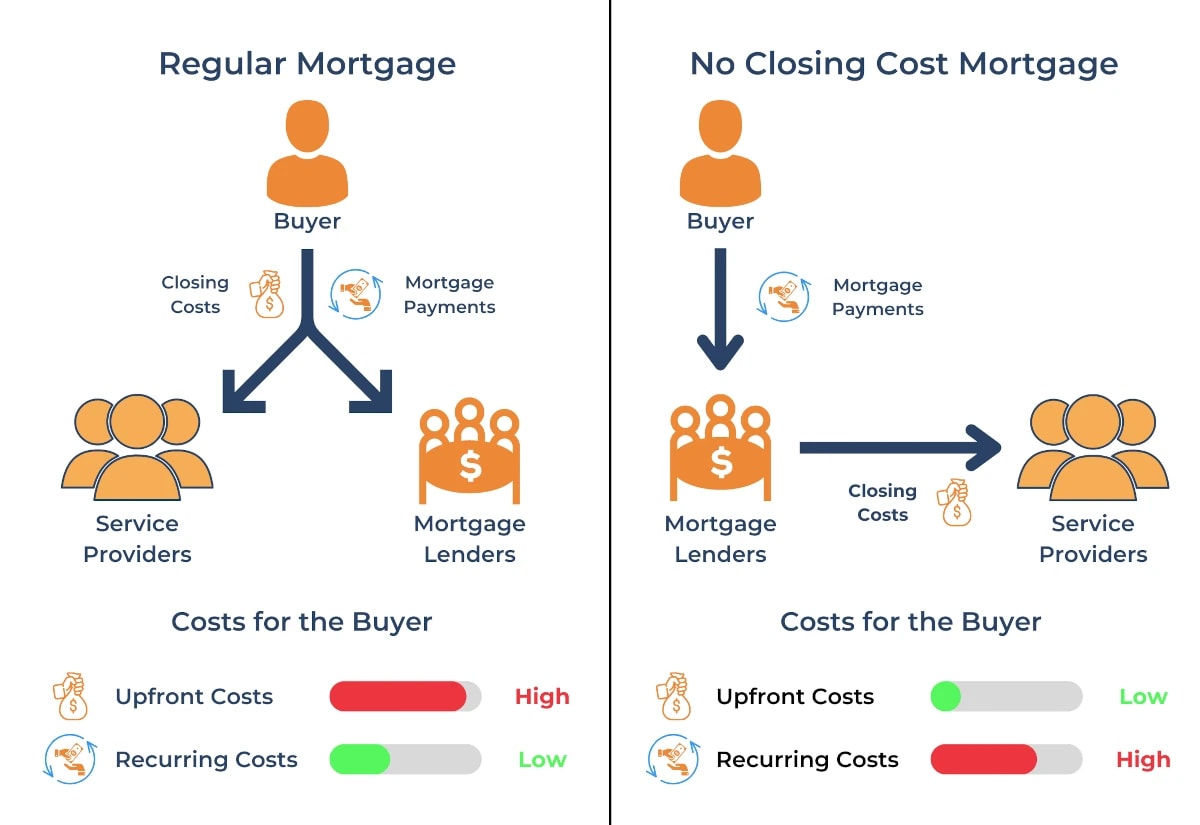
Unlock Your Home Purchase: Strategies to Finance Closing Costs with Your Mortgage
Embarking on the journey to homeownership involves more than just the purchase price; closing costs represent a significant upfront expense that can often catch buyers by surprise. This definitive guide will illuminate the various mechanisms available for integrating these costs into your mortgage, offering a pathway to reduce your immediate out-of-pocket expenses. We will systematically explore the possibilities, weigh the benefits against the drawbacks, and equip you with the knowledge to make an informed decision for your financial future.
Understanding Closing Costs and Your Financing Options
Closing costs are the fees paid at the closing of a real estate transaction. These are distinct from the down payment and typically range from 2% to 5% of the loan amount, though they can vary widely based on location and loan specifics. They encompass a variety of services and fees, including loan origination fees, appraisal fees, title insurance, escrow fees, attorney fees, recording fees, and property taxes or homeowner’s insurance paid in advance.
The concept of "rolling" closing costs into your mortgage means that instead of paying these fees directly at closing, their value is added to your loan principal. This increases the total amount you borrow and, consequently, your monthly mortgage payments and the total interest paid over the life of the loan. While it preserves your cash reserves, it’s crucial to understand the long-term financial implications.
Not all closing costs are eligible for financing, and the specific rules depend on the loan type, lender policies, and current market conditions. For instance, prepaid items like property taxes and homeowner’s insurance premiums, which are paid upfront for future periods, are generally not financed directly but are part of the cash required at closing. However, many lender-specific fees and third-party charges can often be incorporated.

Key Takeaway: Financing closing costs involves adding them to your mortgage principal, reducing immediate cash outflow but increasing your total loan amount and long-term interest paid. Understanding which costs are eligible is the first step.
Methods for Financing Closing Costs
There are several distinct avenues through which you might be able to finance your closing costs. Each method has specific criteria, advantages, and disadvantages, making it essential to evaluate which option best aligns with your financial situation and loan structure.
1. Utilizing Lender Credits (No-Closing-Cost Mortgages)
One common approach is to accept a "lender credit" in exchange for a slightly higher interest rate. In this scenario, your lender provides a credit at closing to cover some or all of your closing costs. The trade-off is that you will pay a higher interest rate on your mortgage for the entire loan term. Over time, the accumulated additional interest could outweigh the upfront savings on closing costs, making this option more suitable for those who anticipate refinancing in the near future or who prioritize immediate cash preservation above all else.
2. Government-Backed Loan Programs (FHA and VA Loans)
Certain government-backed loans offer more flexibility regarding closing costs. VA loans, for eligible service members and veterans, prohibit borrowers from paying certain fees, and allow sellers to cover all of the buyer’s closing costs and up to 4% in concessions. FHA loans, designed for borrowers with lower down payments, permit sellers to contribute up to 6% of the loan amount towards closing costs and prepaid items, which can significantly reduce the buyer’s cash requirements at closing.
3. Increasing Your Loan Amount (Purchase Price & LTV Considerations)
In some cases, especially with conventional loans, you might be able to finance closing costs by simply increasing your mortgage loan amount. This is typically possible if your loan-to-value (LTV) ratio allows for it. For example, if you’re approved for a loan up to 80% LTV, and your current loan amount is only 75%, there might be room to add closing costs without exceeding the LTV limit. However, the total loan amount cannot exceed the appraised value of the home, nor can it include costs that are not directly related to the property’s value.
4. Piggyback Loans (80/10/10 or 80/15/5)
While primarily used to avoid private mortgage insurance (PMI) by keeping the first mortgage at 80% LTV, a piggyback loan (a second mortgage taken out simultaneously with the first) can sometimes cover a portion of both the down payment and closing costs. For example, an 80/10/10 structure means 80% first mortgage, 10% second mortgage, and 10% down payment. The second mortgage can sometimes be structured to cover more than just down payment, indirectly helping with closing costs by freeing up cash that would otherwise go to the down payment.
Key Takeaway: Options range from lender credits (higher interest for lower upfront costs) to specific government-backed loan flexibility and adjusting your primary loan amount within LTV limits. Choose based on your immediate cash needs vs. long-term interest costs.
The Benefits and Drawbacks of Financing Closing Costs
Deciding whether to finance closing costs requires a careful evaluation of the immediate relief against the long-term financial implications. This decision can significantly impact your cash flow at closing and the total cost of your home over the mortgage term.
Benefits:
- Preserve Cash Reserves: The most significant advantage is keeping more money in your bank account. This can be crucial for an emergency fund, home renovations, or simply maintaining financial liquidity post-purchase.
- Lower Upfront Out-of-Pocket Expenses: For many first-time homebuyers or those with limited savings, reducing the lump sum needed at closing can make homeownership more accessible and less daunting.
- Simplified Process (in some cases): With certain lender credit options, the process might feel simpler as you don’t need to coordinate separate payments for various closing fees.
Drawbacks:
- Increased Loan Principal: Adding closing costs to your mortgage means you’re borrowing more money. This directly leads to higher monthly mortgage payments, as you’re amortizing a larger sum.
- More Interest Paid Over Time: Financing closing costs means you will pay interest on those costs for the entire duration of your loan (typically 15 or 30 years). Even a few thousand dollars added to the principal can result in thousands more in interest over the life of the loan.
- Higher Debt-to-Income (DTI) Ratio: A larger loan amount can slightly impact your DTI ratio, which lenders use to assess your repayment ability. While usually marginal, it could be a factor in tighter lending scenarios.
- Potential LTV Restrictions: Some loan programs or lenders have strict loan-to-value (LTV) limits, which might prevent you from financing a significant portion of closing costs if it pushes your LTV too high.
Key Takeaway: While financing closing costs provides immediate cash relief and can make homeownership more accessible, it comes at the expense of a higher total cost of the loan and increased monthly payments over the long term. Weigh your present cash needs against future financial burden.
Crucial Considerations Before You Decide
Before committing to financing your closing costs, a thorough understanding of the nuances and potential long-term impacts is essential. This decision should align with your broader financial strategy and future goals.
1. Calculate the True Cost Over Time
Don’t just look at the monthly payment increase. Use an amortization calculator to understand how much additional interest you will pay over the entire loan term by financing your closing costs. For example, $5,000 in closing costs added to a 30-year mortgage at 7% interest could mean paying an extra $7,000-$10,000 in interest over the loan’s life. This long-term perspective is vital.
2. Understand Lender-Specific Policies and Restrictions
Not all lenders offer the same options, and their policies on financing closing costs can vary widely. Some might have stricter loan-to-value (LTV) limits or specific rules about which fees can be included. Always discuss these options transparently with your loan officer and get all terms in writing. Ensure you understand the distinction between prepaid items (like insurance and taxes) and actual closing fees, as they are treated differently.
3. Impact on Refinancing Potential
If you plan to refinance your mortgage in the future, having a higher loan principal due to financed closing costs could affect your equity position and eligibility for certain refinance programs. A lower LTV is generally more favorable for refinancing, offering better rates and terms. Consider how this initial decision might influence your options down the line.
4. Explore Alternatives to Financing
Before you commit to adding closing costs to your loan, investigate other ways to reduce these upfront expenses. This could include negotiating seller concessions, asking for lender credits (if you understand the interest rate trade-off), or even seeking gift funds from family members. Sometimes, a "no-closing-cost mortgage" isn’t truly free; the costs are often covered by a higher interest rate or other fees, so compare the total cost over time carefully.
Key Takeaway: A comprehensive evaluation involves calculating the long-term interest cost, understanding specific lender rules, considering future refinancing plans, and exploring all available alternatives to ensure the chosen path is truly the most beneficial for your financial health.
Fact: National average closing costs for a single-family home typically range from 2% to 5% of the loan amount, but can be as high as 7% in some states. For a $300,000 home, this could mean $6,000 to $15,000 in additional funds needed at closing.
Insight: This substantial sum highlights why financing options are attractive, yet also why the long-term cost implications must be thoroughly understood.
Stat: Adding $10,000 in closing costs to a 30-year fixed-rate mortgage at 7% interest increases your total interest paid by approximately $14,000 over the life of the loan, assuming no prepayments.
Insight: The seemingly small increase in principal translates into a significantly larger sum in total interest paid, underscoring the importance of long-term cost analysis.
Frequently Asked Questions About Financing Closing Costs
Are all closing costs eligible to be financed into a mortgage?
No, not all closing costs can be financed directly into your mortgage. Generally, lender fees (like origination, underwriting, or processing fees) and third-party charges (such as appraisal, title search, or attorney fees) can often be rolled into the loan. However, prepaid expenses, such as property taxes, homeowner’s insurance premiums, and interest for the remainder of the month of closing, typically must be paid out-of-pocket at closing. The specific types of costs eligible for financing also depend on the loan program (e.g., FHA, VA, Conventional) and the individual lender’s policies.
How much will financing closing costs add to my monthly payment?
The amount added to your monthly payment by financing closing costs depends on several factors: the total amount of closing costs financed, your interest rate, and the loan term. For a rough estimate, you can use an online mortgage calculator. For example, adding $5,000 to a 30-year mortgage at a 7% interest rate might increase your monthly payment by approximately $33-$35. While this might seem minimal monthly, it significantly increases the total interest paid over the life of the loan. Always calculate the specific impact for your unique loan terms.
Is financing closing costs always a good idea?
Financing closing costs is not always the best option; it largely depends on your individual financial situation and priorities. It can be an excellent strategy if you have limited cash reserves, want to preserve your emergency fund, or anticipate a significant career change or expense in the near future. However, if you have sufficient savings, paying closing costs upfront can save you thousands of dollars in interest over the life of your loan. The decision should balance your immediate need for cash liquidity against the long-term cost savings of paying those fees out-of-pocket.